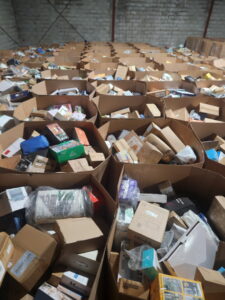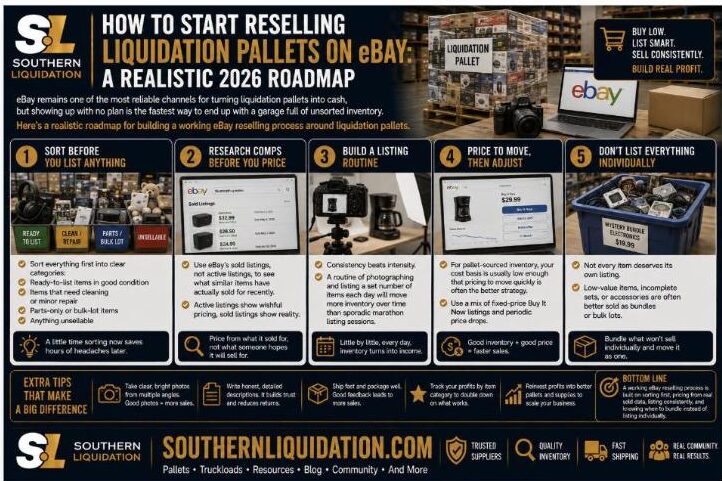
eBay remains one of the most reliable channels for turning liquidation pallets into cash, but showing up with no plan is the fastest way to end up with a garage full of unsorted inventory. Here’s a realistic roadmap for building a working eBay reselling process around liquidation pallets.
Step One: Sort Before You List Anything
Resist the urge to list items the moment they come off the pallet. Sort everything first into clear categories: ready-to-list items in good condition, items that need cleaning or minor repair, parts-only or bulk-lot items, and anything unsellable. This upfront sorting saves far more time than it costs and keeps you from mixing your best inventory in with items that will slow you down.
Step Two: Research Comps Before You Price
Use eBay’s sold listings, not active listings, to see what similar items have actually sold for recently. Active listings show wishful pricing; sold listings show reality. Pay attention to condition notes on comparable sold items, since a small difference in condition or completeness can significantly change realistic price expectations.
Step Three: Build a Listing Routine
Consistency beats intensity here. A routine of photographing and listing a set number of items each day will move more inventory over time than sporadic marathon listing sessions. Good, well-lit photos from multiple angles and honest, specific condition descriptions reduce returns and disputes later, which matters more for your account health than any single listing.
Step Four: Price to Move, Then Adjust
For pallet-sourced inventory, your cost basis is usually low enough that pricing to move quickly, rather than holding out for top dollar, is often the better strategy. Use a mix of fixed-price “Buy It Now” listings for in-demand items and periodic price drops on items that have sat for a while, rather than letting stale inventory tie up shelf space indefinitely.
Step Five: Don’t List Everything Individually
Not every item deserves its own listing. Low-value items, incomplete sets, or accessories are often better sold as bundles or bulk lots. This clears inventory faster and reduces the time spent individually photographing and listing items that wouldn’t generate meaningful profit on their own.
Bottom Line
A working eBay reselling process is built on sorting first, pricing from real sold data, listing consistently, and knowing when to bundle instead of listing individually. The sellers who succeed with liquidation pallets treat eBay as a system to run, not a one-off way to offload a single load.