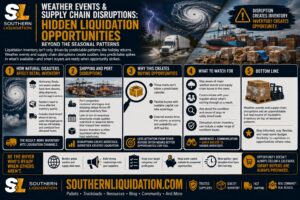
Liquidation inventory isn’t only driven by predictable patterns like holiday returns. Weather events and supply chain disruptions create sudden, less predictable spikes in what’s available, and understanding why helps buyers recognize opportunity when it shows up outside the usual calendar.
How Natural Disasters Affect Retail Inventory
Hurricanes, floods, and other severe weather events can force store closures, delay shipments, and damage inventory in transit or in warehouses. Retailers dealing with disrupted stores often need to move affected inventory quickly, whether it’s stock that needs to be relocated ahead of a storm, water-damaged goods that are still sellable but no longer meet retail standards, or overstock that piled up because a distribution route was disrupted.
Shipping and Port Disruptions
Port congestion, container shortages, and shipping delays can throw off a retailer’s carefully planned inventory flow. When shipments arrive late or in the wrong sequence, retailers can end up with sudden overstock of seasonal items that missed their selling window, or mismatched inventory that doesn’t align with current demand. That excess frequently gets moved through liquidation channels rather than held indefinitely.
Why This Creates Buying Opportunities
These disruption-driven loads don’t follow a predictable seasonal calendar, which means buyers who stay flexible and keep some capital available can take advantage of inventory spikes that catch less-attentive buyers off guard. Because the volume showing up is driven by an external event rather than steady operations, pricing and availability can shift quickly once suppliers start moving that inventory.
What to Watch For
Staying aware of major weather events and known supply chain bottlenecks in the news, and communicating with your supplier about what’s coming through as a result, is the most practical way to catch these opportunities. It’s also worth asking specifically about the condition and cause of any load that seems unusually large or oddly timed, since disruption-driven inventory can include a wider range of condition issues than a typical returns-driven load.
Bottom Line
Weather events and supply chain disruptions add an unpredictable but real source of liquidation inventory on top of the usual seasonal patterns. Buyers who stay aware of what’s happening in the broader supply chain, and keep some flexibility in their budget, are better positioned to take advantage of these less predictable spikes when they happen.