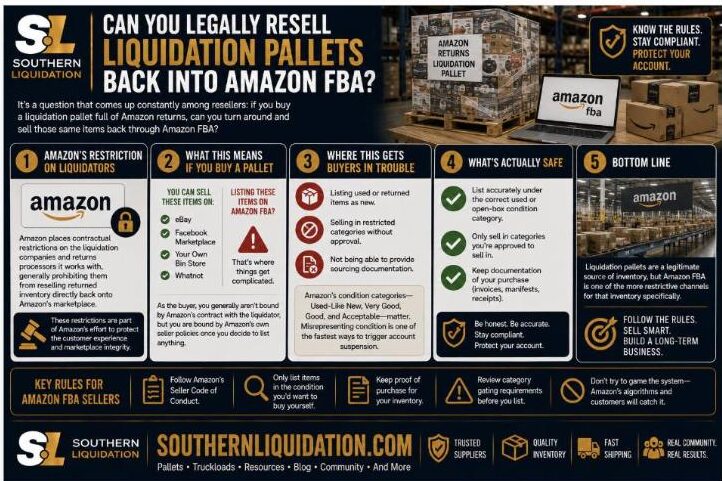
It’s a question that comes up constantly among resellers: if you buy a liquidation pallet full of Amazon returns, can you turn around and sell those same items back through Amazon FBA? The honest answer involves more nuance than a simple yes or no, and getting it wrong can put your seller account at risk.
Amazon’s Restriction on Liquidators
Amazon places contractual restrictions on the liquidation companies and returns processors it works with, generally prohibiting them from reselling returned inventory directly back onto Amazon’s marketplace. This is meant to keep condition and safety standards consistent for Amazon customers and to prevent previously returned merchandise from re-entering Amazon’s system without proper inspection.
What This Means If You Buy a Pallet
As the buyer of a liquidation pallet, you generally aren’t bound by Amazon’s contract with the liquidator, but you are bound by Amazon’s own seller policies once you decide to list anything on Amazon yourself. That means you can legally resell those items through other channels, such as eBay, Facebook Marketplace, your own bin store, or Whatnot, without issue. Listing the same items on Amazon FBA is where things get complicated, since Amazon has strict rules about condition disclosure, product authenticity, and category approval that apply regardless of where you sourced the inventory.
Where This Gets Buyers in Trouble
Sellers run into problems on Amazon when they list used, returned, or refurbished items as “new,” when they sell in restricted or gated categories without approval, or when they can’t provide adequate sourcing documentation if Amazon requests it. Amazon’s Grade and Resell type programs use specific condition categories, such as Used-Like New, Very Good, Good, and Acceptable, and misrepresenting an item’s actual condition is one of the fastest ways to trigger account suspension.
What’s Actually Safe
If you want to sell liquidation-sourced inventory through Amazon, the safer path is listing accurately under the correct used or open-box condition category, only in categories you’re approved to sell in, and keeping any documentation of your purchase in case Amazon asks for proof of sourcing. Because the rules here carry real account risk and change periodically, it’s worth reviewing Amazon’s current seller policies directly or consulting someone familiar with Amazon compliance before listing returned merchandise at scale.
Bottom Line
Liquidation pallets are a legitimate source of inventory for resale, but Amazon FBA is one of the more restrictive channels for that inventory specifically. Selling through other marketplaces avoids most of this risk entirely, while selling on Amazon requires careful attention to condition disclosure, category approval, and documentation.