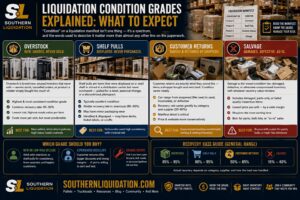
“Condition” on a liquidation manifest isn’t one thing — it’s a spectrum, and the words used to describe it matter more than almost any other line on the paperwork. Here’s what each grade actually means and what to expect when you open the box.
Overstock
Overstock is brand-new, unused inventory that never sold — excess stock, cancelled orders, or product a retailer simply bought too much of. This is the highest and most consistent condition grade available, with recovery rates commonly cited in the 85-95% range. It costs more per unit than other grades, but the risk is lowest and the resale value per item is highest.
Shelf Pulls
Shelf pulls are items that were displayed on a retail shelf or stored in a distribution center but never actually purchased — pulled for a reset, a seasonal changeover, or a discontinued planogram. They’re typically in excellent condition, sometimes with minor packaging wear from handling, and carry a similar recovery rate to overstock. The main difference from overstock is that shelf pulls have been physically handled and displayed, so expect the occasional dented box or faded label.
Customer Returns
Customer returns are exactly what they sound like — items a shopper bought and sent back. This is where condition variance gets wide fast. Some returns are unopened and effectively new. Others are missing parts, were used and returned for buyer’s remorse, or are genuinely defective. Recovery rates and quality vary enormously by category and by supplier, which is why manifest research matters more here than on any other grade. A generic customer returns pallet with no further detail should be priced and evaluated more conservatively than one with condition-level detail per item.
Salvage
Salvage is the lowest condition tier: damaged, defective, or otherwise compromised inventory that’s being sold for whatever recovery value remains. Salvage loads can include parts-only items, cosmetically damaged product, or goods that failed quality inspection. This is the cheapest grade per unit by a wide margin, but it requires the most sorting time, the most realistic expectations, and often a plan for reselling as parts, bulk lots, or “as-is” rather than individual retail listings.
Which Grade Should You Buy?
New resellers or anyone selling on platforms with strict return policies should lean toward overstock or shelf pulls, where consistency reduces the chance of a bad customer experience. Experienced resellers comfortable sorting and testing can find strong margins in customer returns, since the discount is steeper than the added risk in most categories. Salvage makes sense mainly for buyers with a specific plan for parts, bulk resale, or a very high risk tolerance.
Bottom Line
None of these grades are inherently “good” or “bad” — they’re a tradeoff between price and consistency. Know which one you’re buying, price your expectations accordingly, and match the grade to your actual sales channel and risk tolerance instead of chasing the cheapest per-pallet price.


