Retailers have been dealing with a growing wave of return fraud, ranging from wardrobing to empty-box returns to organized retail crime rings gaming refund policies. That shift is quietly changing what ends up on liquidation pallets, and it’s worth understanding if you’re buying returned merchandise regularly.
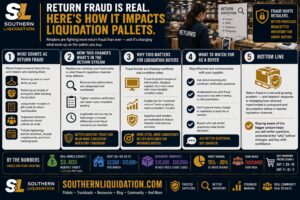
What Counts as Return Fraud
Return fraud covers a range of behaviors: returning used or worn items as new, returning an empty or wrong box after keeping the actual product, using stolen receipts or gift cards to return merchandise, and more organized schemes involving repeatedly purchasing and returning items to exploit refund policies. Retailers have been tightening policies in response, including shorter return windows, receipt requirements, and increased use of return-tracking services.
How This Changes What’s in the Return Stream
As retailers get better at catching certain kinds of fraud earlier in the process, more of what reaches liquidation channels has already been through additional scrutiny than in years past. This can mean tighter condition verification before an item is categorized and manifested, which in turn can mean more consistent condition grading, but also occasionally means legitimate returns get held longer or routed differently while retailers sort out fraud concerns.
Why This Matters for Liquidation Buyers
Buyers may notice that some categories more targeted by fraud, like high-value electronics or designer apparel, get manifested with more detailed condition notes than in the past, since suppliers and retailers are motivated to reduce disputes. It also means the overall quality bar for what qualifies as a legitimate “customer return” load has, if anything, been getting more consistent rather than less, as retailers refine their fraud detection.
What to Watch For as a Buyer
None of this changes the fundamentals of buying liquidation pallets, but it’s worth staying in communication with your supplier about sourcing and condition verification practices, since retailers’ anti-fraud measures upstream can occasionally affect timing or documentation on the loads that reach you. Buyers who understand this context are better equipped to ask informed questions rather than assuming every fluctuation in manifest detail or load composition is random.
Bottom Line
Return fraud is a real and growing problem for retailers, and their response to it is quietly reshaping how returned merchandise gets processed and documented before it reaches liquidation channels. Staying aware of this broader context helps buyers ask better questions and understand why sourcing and manifesting practices continue to evolve.