If you have tried to book a freight shipment in 2026 and felt like the quotes were eye-watering — you are not imagining it. Freight prices have hit all-time highs across every major transportation category, and the liquidation industry is feeling the pressure harder than almost anyone else.
This article breaks down exactly what is driving the freight crisis, what it means for liquidation buyers and sellers, and what you can do right now to protect your margins.
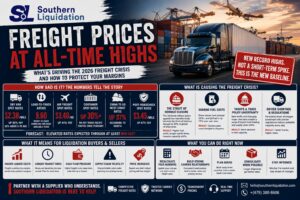
How Bad Is It? The Numbers Tell the Story
The Logistics Manager’s Index — a ten-year-old benchmark that tracks transportation conditions across the US supply chain — recorded Transportation Prices at 96.0 in May 2026. That is the single highest reading ever recorded for any metric in the index’s entire history.
Here is what that looks like in real numbers:
- Dry van spot rates: $2.38 per mile — up 45% year over year and 30% above the five-year non-pandemic average
- Load-to-truck ratios: 9.60 — meaning nearly 10 loads competing for every available truck
- Air freight spot rates: $3.40/kg — up 41% year over year
- Container spot rates: Up 30%+ on key trans-Pacific routes since late February
- China to US West Coast rates: Up 37% according to freight analytics firm Xeneta
- Post-Roadcheck spot rates: Hit $3.45/mile — up 47% year over year
Forecasters at FTR Transportation Intelligence, Uber Freight and C.H. Robinson all agree — this is not a short-term spike. Elevated rates are expected to continue through at least mid-2027. One analyst called it the new baseline.
What Is Causing the Freight Crisis?
Several forces have converged simultaneously to create the most extreme freight market since the pandemic years of 2021-22.
The Strait of Hormuz Closure
The primary driver is the US-Israel military action against Iran in February 2026, which has effectively blocked the Strait of Hormuz — the narrow