The liquidation industry has grown fast, and unfortunately, so has the number of people trying to take advantage of new resellers. Every week, buyers post in Facebook groups and reseller forums about paying for a “truckload” that never arrived, receiving a box of garbage instead of the manifested inventory they were promised, or discovering the “company” they wired money to didn’t actually exist. If you’re new to buying pallets or truckloads, learning to tell a legitimate supplier from a scam could save you thousands of dollars. Here’s exactly what to look for.
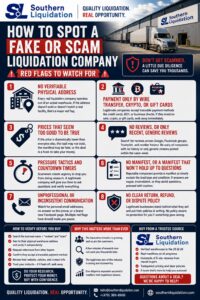
Red Flag #1: No Verifiable Physical Address
Every real liquidation company operates out of an actual warehouse. If a seller can’t tell you where their inventory is physically located, or if the address they give doesn’t match up on Google Maps to anything resembling a warehouse or distribution facility, that’s a serious warning sign. Legitimate companies are generally proud to share their location because it proves they’re a real operation with real overhead, not just a website and a payment link.
Red Flag #2: Payment Only by Wire Transfer, Crypto, or Gift Cards
This is probably the single biggest scam indicator in the entire industry. Legitimate liquidation suppliers accept traceable payment methods like credit cards, ACH transfers, or business checks. If a seller insists on wire transfer only, cryptocurrency, or (a classic scam tactic) gift cards, walk away immediately. These payment methods are difficult or impossible to reverse once sent, which is exactly why scammers prefer them.
Red Flag #3: Prices That Seem Too Good to Be True
If a truckload of brand-name electronics is listed at a fraction of what every other supplier charges, there’s usually a reason. Either the load doesn’t exist, the manifest is fabricated, or the “discount” is a hook to get your deposit before disappearing. Liquidation pricing does vary, but if one listing is dramatically cheaper than comparable loads elsewhere, treat it as a signal to dig deeper rather than a lucky find.
Red Flag #4: No Reviews, or Only Recent, Generic Reviews
Before buying from any liquidation company, search their name along with the word “reviews” or “scam.” Legitimate suppliers that have been operating for years will have a trail of reviews across Google, Facebook groups, Trustpilot, and reseller forums. Be cautious of companies with zero online footprint, or ones where every review was posted within the same week and reads like it was written by the same person. Real customer feedback tends to be specific, mentioning load types, delivery times, or communication experiences, rather than vague five-star praise.
Red Flag #5: Pressure Tactics and Countdown Timers
Scammers rely on urgency to stop you from doing due diligence. If a seller is pushing you to “act now before this load is gone” or creating artificial deadlines to rush your decision, slow down. A legitimate company understands that new buyers need time to verify who they’re dealing with, and won’t punish you for asking questions first.
Red Flag #6: No Manifest, or a Manifest That Won’t Hold Up to Questions
Reputable liquidation companies can typically provide a manifest, or at minimum clearly explain what type of load you’re buying (manifested, unmanifested, customer returns, shelf pulls, etc.) and what condition to expect. If a seller is cagey about what’s actually inside the pallet, refuses to answer basic questions about condition or source, or gives contradictory answers, that’s a sign they may not actually have the inventory they’re describing.
Red Flag #7: Unprofessional or Inconsistent Communication
Take note of how a company communicates before you buy. Are they using a business email address, or a personal Gmail account? Does their phone number connect to an actual person, or does it go straight to voicemail with no company name? Do they have a real website with policies, contact information, and consistent branding, or just a Facebook page created a few weeks ago? None of these signs alone are definitive proof of a scam, but several of them together should make you pause.
Red Flag #8: No Clear Return, Refund, or Dispute Policy
Legitimate businesses put their policies in writing because they stand behind what they sell. If a company has no refund policy, no terms of service, and no clear process for what happens if a load doesn’t match what was promised, you have no recourse if something goes wrong. This is one of the easiest things to check before you ever hand over payment.
How to Verify a Liquidation Company Before You Buy
A few simple steps can save you from most scams entirely. Search the business name plus “reviews” and “scam” before committing to anything. Ask for their physical warehouse address and look it up independently. Request references from other buyers who’ve purchased from them before. Confirm they accept a traceable payment method. And trust your instincts: if something about the deal feels rushed, vague, or too good to be true, it probably is.
Why This Matters More Than Ever in 2026
As liquidation and reselling have become more popular, so has the number of bad actors trying to profit from new buyers who don’t yet know what to look for. The good news is that the legitimate side of this industry is still thriving, and doing a small amount of due diligence up front makes it easy to avoid the handful of scammers giving the space a bad name.
At Southern Liquidation, we operate out of verified warehouses in both the United States and the United Kingdom, provide manifests on our programs, and have a track record of reviews from resellers who’ve bought from us repeatedly. If you’re ever unsure whether a deal looks legitimate, feel free to reach out to our team, we’re happy to help you evaluate it, even if it’s not one of our own programs.