Mystery boxes are one of the easiest ways to move dead inventory and get people excited about buying — but before you list one, there’s a legal line here that has nothing to do with liquidation and everything to do with old-school gambling law.
The Legal Test That Actually Matters
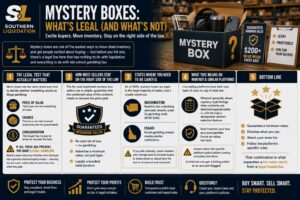
Most states use the same three-part test to decide whether something counts as illegal gambling: a prize of value, chance (a real risk of loss), and consideration (the buyer has to pay to enter). If all three are present at the same time, you have a gambling product, not a retail one. Mystery boxes only cross that line when the buyer has a genuine chance of losing money — meaning the box could realistically be worth less than what they paid.
How Most Sellers Stay On the Right Side of the Law
The fix most legitimate mystery box sellers use is simple: guarantee that the combined value of the contents meets or exceeds the price paid. If there’s no real risk of loss, the “chance” element of the gambling test disappears, and the box is legally just a bundled retail product. This is why you’ll see reputable sellers advertise a guaranteed minimum value, rather than just teasing “could be worth $500!”
States Where You Need to Be Careful
As of 2026, mystery boxes are legal in the large majority of states, but a couple stand out. Washington restricts the underlying mechanic directly under its gambling code (RCW 9.46), and Idaho’s broad gambling statute creates similar restrictions. If you sell nationally, it’s worth checking whether your listings need to exclude buyers in these states or adjust how the box is structured and marketed.
What This Means on Whatnot and Similar Platforms
Live selling platforms have their own layer of rules on top of state law. Whatnot, for example, generally allows mystery-style listings when contents are disclosed appropriately or sold through a designated random-selection feature, rather than being marketed as a pure gamble. Always check the specific platform policy before running a mystery box show — a violation can get a listing pulled or an account flagged even if the underlying law would technically allow it.
Bottom Line
Mystery boxes aren’t illegal — but “mystery” can’t mean “you might get nothing.” Guarantee a minimum value, disclose what you can, watch your state list, and follow the platform’s specific rules on top of the law. That combination is what separates a fun sales tactic from a legal headache.