A bin store has a lot going for it: low overhead, high foot traffic, and inventory you bought for cents on the dollar. It also has a specific set of risks that a lot of first-time owners don’t think about until something goes wrong: a customer trips over a bin, a shopper gets hurt by a recalled item you didn’t know was in a pallet, or a pipe bursts overnight and ruins a room full of inventory. Insurance is what keeps any one of those events from turning into a business-ending loss.
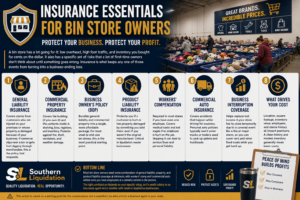
General Liability Insurance
This is the foundation for any storefront. General liability covers claims from customers who are injured on your premises or whose property is damaged because of your business, along with the legal costs of defending those claims. If someone slips near a bin or gets hurt digging through merchandise, this is the policy that responds.
Commercial Property Insurance
This covers the physical building (if you own it) and, more importantly for a bin store, the contents inside it: shelving, bins, registers, and the inventory itself. Liquidation inventory can add up to a large dollar value sitting in one room, and property coverage protects that value against fire, theft, vandalism, and weather damage.
Business Owner’s Policy (BOP)
A BOP bundles general liability and commercial property into a single, usually more affordable package. For a small to mid-size bin store, this is often the most practical starting point, since it covers the two biggest risks in one policy rather than paying for them separately.
Product Liability Insurance
This one is easy to overlook, but it matters more in liquidation resale than in most other retail businesses. You’re selling returned, overstocked, and sometimes shelf-pulled merchandise as-is, and occasionally a recalled or defective item slips through in a pallet. Product liability coverage protects you if a customer is hurt or has property damaged by something you sold them, even though you weren’t the original manufacturer.
Workers’ Compensation
If you have even one employee lifting bins, unloading pallets, or working the register, most states require workers’ compensation insurance. It covers medical costs and lost wages if an employee is hurt on the job, and skipping it when you’re required to carry it can lead to serious fines on top of being personally liable for any injury.
Commercial Auto Insurance
If you or an employee drives a truck or trailer to pick up pallets and truckloads from a distribution center, a personal auto policy typically won’t cover accidents that happen while conducting business. Commercial auto coverage closes that gap.
Business Interruption Coverage
Often added to a BOP, this covers lost income if your store has to close temporarily because of a covered event like a fire or major storm damage, helping you cover rent and other fixed costs while you get back up and running.
What Drives Your Cost
Premiums are shaped by your location, square footage, the dollar value of inventory you’re carrying, whether you have employees, and your claims history. A newer store with a clean history and modest inventory will generally pay less than an established multi-location operation with higher foot traffic and inventory value.
Bottom Line
Most bin store owners end up needing some combination of general liability, property, and product liability coverage at minimum, with workers’ comp and commercial auto added once you have employees or a delivery vehicle in the picture. The right combination depends on your specific setup, so it’s worth talking to an insurance agent who’s familiar with retail or liquidation businesses rather than guessing at coverage on your own. This article is meant as a starting point for the conversation, not a substitute for advice from a licensed agent in your state.