Type “are liquidation pallets worth the risk” into Google and you’ll find a hundred opinions and almost no straight answers. Here’s the honest one: yes, but the risk isn’t evenly distributed, and knowing where it actually sits is what separates people who profit from people who get burned once and quit.
The Real Risks, Not the Scary-Sounding Ones
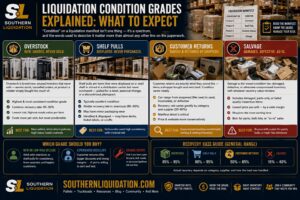
The biggest risk isn’t “the pallet might be a scam,” even though that gets the most attention online. It’s condition variance. A manifest lists retail value, not resale value, and even a fully manifested load can include damaged packaging, missing parts, or items that test as defective. Unmanifested pallets carry more of this risk in exchange for a lower price. That variance is normal and priced into the model — it’s not evidence you got cheated.
What the Numbers Actually Look Like
Realistic ROI on a well-bought pallet runs somewhere between 30% and 100%+, depending on category and how much time you put into sorting, cleaning, and listing. A $500 to $1,500 pallet can reasonably turn into $2,000 to $10,000 in total resale value once everything is listed individually — but that’s gross revenue, not profit, and it assumes you actually sell through most of the load rather than letting slow-moving items sit for months.
Where the Risk Actually Comes From
Almost every real horror story traces back to one of three things: buying from an unverified supplier with no traceable business history, skipping manifest research and trusting the listed retail value at face value, or underestimating how much time sorting and listing actually takes. None of these are liquidation-specific risks — they’re the same risks in any inventory-based business, just compressed into a single upfront purchase instead of spread out over time.
How to Tip the Odds in Your Favor
Buy from suppliers with a verifiable address and traceable payment methods. Read manifests line by line instead of trusting the total retail value. Start with a single pallet before committing to a truckload, so a bad batch costs you hundreds instead of thousands. Track your actual numbers — cost, fees, and time — so you know your real margin instead of guessing at it.
Bottom Line
Liquidation pallets are worth the risk for people who treat it like a business: verify suppliers, research manifests, start small, and track real numbers. They’re a bad bet for people expecting a guaranteed, hands-off return. The risk is real, but it’s manageable — and it’s smaller than the online horror stories make it sound.