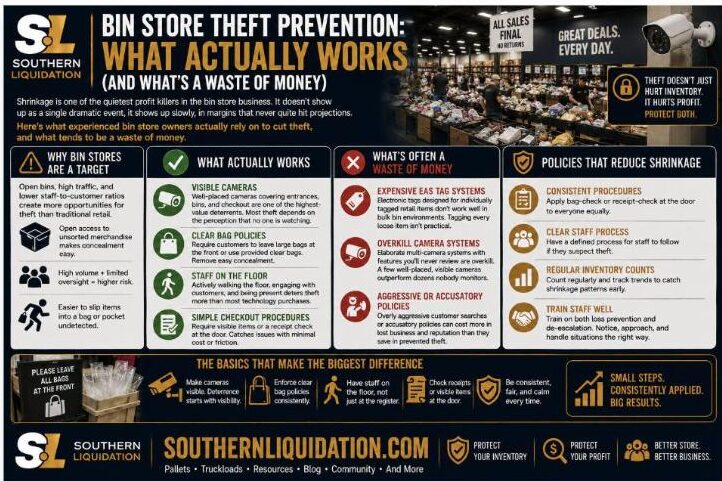
Shrinkage is one of the quietest profit killers in the bin store business. It doesn’t show up as a single dramatic event, it shows up slowly, in margins that never quite hit projections. Here’s what experienced bin store owners actually rely on to cut theft, and what tends to be a waste of money.
Why Bin Stores Are a Target
The entire bin store model is built around customers digging through open bins of unsorted merchandise, often in a high-traffic, high-volume environment with lower staff-to-customer ratios than a typical retail store. That combination, open access plus limited oversight, makes it an easier environment to slip items into a bag or pocket compared to a traditional shelf-and-checkout layout.
What Actually Works
Visible, well-placed cameras covering entrances, bins, and checkout consistently show up as one of the highest-value deterrents, since most opportunistic theft depends on the perception that no one is watching. Clear bag policies, requiring customers to leave large bags at the front or use provided clear bags, remove an easy concealment method. Staff actively walking the floor rather than staying at a register does more to deter theft than most technology purchases. Simple checkout procedures, like requiring visible items or a receipt check at the door, catch a meaningful share of issues without much added cost.
What’s Often a Waste of Money
Expensive electronic article surveillance (EAS) tag systems designed for individually tagged retail items often don’t translate well to bulk bin merchandise, since tagging every loose item isn’t practical. Elaborate multi-camera systems with features you’ll never review also tend to be overkill for a single-location store; a handful of well-placed, clearly visible cameras beats a dozen hidden ones nobody monitors. Overly aggressive customer searches or accusatory policies can also cost you more in lost repeat business and reputation than they save in prevented theft.
Policies That Reduce Shrinkage
Beyond physical deterrents, clear written policies help: a consistent bag-check or receipt-check process applied to everyone equally, a defined process for staff to follow if they suspect theft (rather than improvising in the moment), and regular inventory counts to catch shrinkage patterns early rather than discovering them at year-end. Training staff on de-escalation matters just as much as training them to notice suspicious behavior.
Bottom Line
The most effective theft prevention in a bin store comes from visibility and consistent staff presence, not expensive technology. Prioritize cameras customers can see, clear bag policies, and staff who are actually moving through the floor, and treat elaborate surveillance systems as a lower priority than the basics most stores skip.