Bin stores are one of the fastest growing retail business models in the United States right now — and for good reason. Low startup costs, a simple business model, loyal repeat customers and a direct path to profitability make them one of the best opportunities available to entrepreneurs in 2026.
If you have been thinking about opening a bin store but are not sure where to start — this guide covers everything you need to know, from finding a location and sourcing inventory to pricing strategy and building a loyal customer base.
What Is a Bin Store?
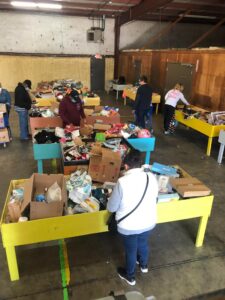
A bin store is a brick and mortar retail location where liquidation merchandise is placed into large open bins for customers to dig through and purchase at flat daily prices. Think of it as a treasure hunt — customers pay $5, $4, $3, $2 or $1 depending on what day of the week it is, and they can find almost anything in the bins — electronics, toys, home goods, clothing, tools, kitchen items and more.
The inventory changes every week which means customers always have a reason to come back. The thrill of not knowing what you will find is what keeps bin store shoppers loyal and coming back week after week.
Bin stores are built on one core concept: volume over value. You are not trying to get top dollar for individual items — you are trying to move large quantities of liquidation merchandise quickly and profitably.
Is a Bin Store Profitable?
Yes — when run correctly a bin store can be very profitable. Here is a realistic example of what the numbers can look like:
- Monthly sales: $38,000 — $42,000
- Monthly expenses (rent, inventory, staff, utilities): $31,000 — $35,000
- Monthly profit: $5,000 — $8,000
The key to profitability is keeping your cost per unit low and your inventory flowing consistently. A high piece count liquidation truckload from a major retailer — purchased at 5-15% of retail value — gives you the raw material to run a profitable bin store operation.
Step 1 — Choose Your Location
Location is one of the most important decisions you will make. The good news is that bin stores do not need to be in premium high street locations — in fact a secondary location with lower rent is often better for your margins while still generating strong foot traffic once word of mouth kicks in.
What to look for in a bin store location:
- Size: 1,500 sqft minimum for a small operation, 3,000-5,000 sqft for a full scale store with storage space for incoming truckloads
- Loading access: you need to be able to receive pallets and truckloads — a loading dock or ground level access with space for a forklift is ideal
- Parking: customers need to be able to get to you easily — good parking is important
- Rent: commercial space in secondary locations or older plazas can often be found for $8-15 per sqft per year — much cheaper than prime retail
- Zoning: confirm the space is zoned for retail commercial use before signing any lease
Step 2 — Sort Out Your Permits and Business Setup
Before you open you need to get your business and legal setup in order. Here is what you need:
- Business license — required to operate legally in your city or county
- Sales tax permit / resale certificate — this is critical. It allows you to purchase liquidation inventory tax exempt and then collect sales tax from your customers. You will need this to buy from most wholesale liquidation suppliers including Southern Liquidation
- Zoning permit — confirms your location is approved for retail use
- Fire permit — required for most commercial retail spaces
- Signage permit — needed before you install any exterior signs
- EIN (Employer Identification Number) — needed if you plan to hire staff
Check with your local city or county business office for the specific requirements in your area. Most of these permits can be obtained within a few weeks.
Step 3 — Set Up Your Store
The great news about bin stores is that you do not need a fancy interior. Customers are not coming for the decor — they are coming for the deals. Here is what you need:
The Bins
Your bins are the heart of your store. Most bin store owners build or buy large wooden or plastic bins that customers can reach into easily. A typical setup might be 6-10 rows with multiple bins per row. Keep these things in mind:
- Bins should be deep enough to hold a good variety of items but not so deep that small items get lost at the bottom
- Leave enough aisle space for customers to move around comfortably — 3-4 feet between rows minimum
- Build or buy bins that are easy to empty and refill quickly — you will be doing this every week
POS System
You need a way to take payments. Most bin stores use a simple tablet-based POS system. Consider whether you want to go cashless (easier to manage, no daily bank trips) or accept cash (some customers prefer it). Card payment processing fees are typically 2-3% per transaction — factor this into your pricing.
Signage
Clear pricing signs are essential. Post your daily pricing schedule — $5 Monday, $4 Tuesday, $3 Wednesday, $2 Thursday, $1 Friday — so customers always know the deal before they start shopping.
Step 4 — Source Your Inventory
This is the most important part of running a bin store. Your inventory is your product and without a consistent, reliable supply of high quality liquidation merchandise at the right price your bin store will struggle.
What to Buy
For bin stores you want high piece count loads — the more individual items in a load the lower your cost per unit and the better your profit margins. Amazon smalls loads, general merchandise loads and mixed returns truckloads are perfect for bin stores.
What works best in bins:
- Amazon returns — smalls and general merchandise
- Walmart and Target general merchandise returns
- Home goods, kitchen items, toys and games
- Clothing and accessories
- Health and beauty products
- Electronics accessories and small gadgets
- Seasonal merchandise
How Much to Buy
A full truckload typically contains 24-30 pallets and thousands of individual items. For a bin store this is the ideal purchase size — you get the lowest cost per unit and enough inventory to keep your bins full for a full week or more. As your store grows you may find yourself ordering multiple truckloads per month.
Where to Buy
Southern Liquidation offers truckloads and pallets of liquidation merchandise from Amazon, Walmart, Target, Home Depot and more — shipped directly to you across the US and UK. This is exactly the type of inventory that powers successful bin stores.
- Browse available truckload programs
- Get a free freight quote
- Become a buyer and get early access to new loads
Calculate Your Profit Before You Buy
Always run your numbers before committing to any load. Use our free Load & Pallet Calculator to work out your cost per item, percent of retail and potential profit before you place an order.
Step 5 — Set Your Pricing Strategy
The standard bin store pricing model works on a declining price schedule throughout the week:
| Day | Price Per Item | What Happens |
|---|---|---|
| Monday | $5 | Fresh inventory — busiest day |
| Tuesday | $4 | Still busy — great deals |
| Wednesday | $3 | Mid-week shoppers hunting deals |
| Thursday | $2 | Regulars looking for steals |
| Friday | $1 | Clearance day — bins get emptied |
| Saturday/Sunday | Restock | New inventory arrives and gets sorted |
On $1 day the goal is to clear out remaining inventory before the new load arrives. Some stores also run a $10 bag day or $20 bag day once a month — customers fill a bag with as much as they can for a flat fee. This is great for clearing out leftover inventory.
Pro Tip — Separate High Value Items
If you find something in a load that is worth significantly more than $5 — a power tool, a piece of electronics, a branded item — pull it out of the bins and sell it separately at a price closer to its actual value. You can use a small retail section in your store, eBay or Facebook Marketplace for these items.
Step 6 — Hire Your Team
Most bin stores start with 2-3 employees. You need people who can:
- Help sort and load inventory into bins on restock days
- Manage the register and assist customers on selling days
- Keep the store clean and organised throughout the week
As your store grows you might also consider hiring someone part time to manage your social media — posting videos of new inventory arrivals on Facebook and TikTok is one of the most effective ways to drive foot traffic.
Step 7 — Market Your Bin Store
The good news — bin stores are largely self-marketing once you get going. Word of mouth spreads fast when you are offering genuine deals. Here is how to accelerate it:
- Google Business Profile — set this up immediately. When someone searches “bin store near me” you need to show up. It is free and takes 15 minutes
- Facebook Business Page — post photos and videos of new inventory every week. Show customers what is coming in before the $5 day to build excitement
- Facebook Live — go live on your Facebook page when new inventory arrives. This is one of the most effective free marketing tools available to bin store owners
- TikTok — short videos of bin diving and unboxing perform extremely well and can drive significant foot traffic
- Consistent hours — pick a schedule and stick to it. Thursday through Monday works well — you have Tuesday and Wednesday to restock
Startup Costs — What to Budget
| Expense | Estimated Cost |
|---|---|
| First and last month rent (2,000 sqft) | $3,000 — $6,000 |
| Bin construction or purchase | $1,000 — $3,000 |
| POS system | $300 — $800 |
| Business permits and licenses | $200 — $500 |
| Insurance (first month) | $200 — $400 |
| Signage | $200 — $600 |
| First truckload of inventory | $3,000 — $8,000 |
| Freight for first truckload | $800 — $2,500 |
| Total estimated startup | $8,700 — $21,800 |
Many successful bin stores have launched for under $15,000. The inventory and freight costs are by far the biggest line item — and that is an investment that pays back quickly once you open your doors.
Tips for Running a Successful Bin Store
- Stay ahead of inventory — never let your bins run dry. Order your next truckload before your current one runs out. Aim to always have inventory arriving within the next 7-10 days
- Track your numbers — know your cost per unit, your daily sales and your weekly profit. The stores that track their numbers improve fastest
- Build relationships with your suppliers — a trusted liquidation supplier who can give you consistent access to high piece count loads is worth more than any other business relationship you will have
- Be consistent with your hours and pricing — customers build habits around your schedule. If you change your days or prices too often they lose trust
- Consider a no-bag policy — some stores allow customers to bring in a bag to shop with but ask them to exit and re-enter once they have paid. This prevents inventory from walking out the door
- Sort on restock day — pull out any high value items before they go in the bins and sell them separately for maximum profit
- Use social media — a 60 second video of your new inventory arriving can drive more foot traffic than any paid ad
Ready to Source Your First Load?
The most important step you can take right now is lining up your inventory supply. Southern Liquidation ships truckloads and pallets of liquidation merchandise from Amazon, Walmart, Target, Home Depot and more — directly to bin stores across the US and UK.
- Browse available truckload programs — see what is currently available
- Get a free freight quote — know your total landed cost before you commit
- Calculate your profit — use our free Load & Pallet Calculator
- Download our free buyer’s guide — The Complete Guide to Buying Liquidation Truckloads
- Become a buyer — get early access to new programs before they go public
Have questions about sourcing inventory for your bin store? Contact our team at hello@southernliquidation.com or call +(479) 380-8606. We have helped hundreds of bin store owners get their inventory supply set up and we would love to help you too.